


We tend to think of heart aging as inevitable — a slow, steady decline baked into the passage of time.
But emerging research suggests that a fat-derived hormone might hold the key to reversing age-related decline in cardiac function. And you can increase it. Not with drugs or supplements, but with a simple intervention you can access today. I’m going to prove it to you!
Today, we’re breaking down:
The Discovery: New data about how a specific hormone produced by brown fat declines with age, and how this descent is directly linked to cardiovascular aging.
The Proof: How transplanting this fat from young animals to old ones restores youthful heart function.
The Action Plan: The specific intervention you can use today to raise this hormone back to youthful levels.
The Hormone That Keeps Hearts Young
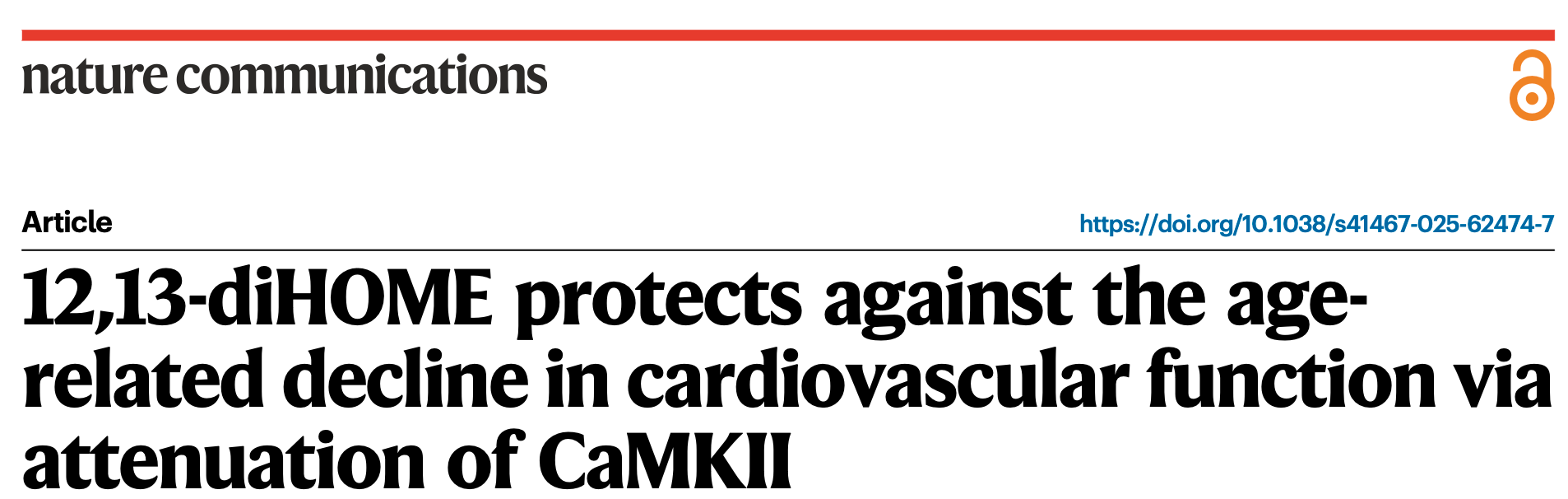
The primary paper I want to discuss was recently published in Nature Communications, boasting a title that does the topic as much justice as if one were to label the mystical dwelling of the magical golden lion Aslan from the Narnia series “Cat House.”
Jokes aside, I know your eyes may glaze over when I say, “Hey, we’re talking about how 12,13-diHOME (12,13-dihydroxy-9Z-octadecenoic acid) attenuates CaMKII function.” But I promise that I will make this both interesting and relevant.
Brown fat as an Endocrine Organ
Perhaps you’ve heard of brown fat—a type of fat tissue that is specialized to produce heat, i.e., “thermogenesis.”
It protects against the cold and is often discussed in nutrition, metabolism, and biohacker circles because of its impressive ability to burn calories.
But that simplistic view of brown fat has led many to overlook its more important role: brown fat is an endocrine organ, secreting hormones that alter metabolism and physiology in meaningful ways.
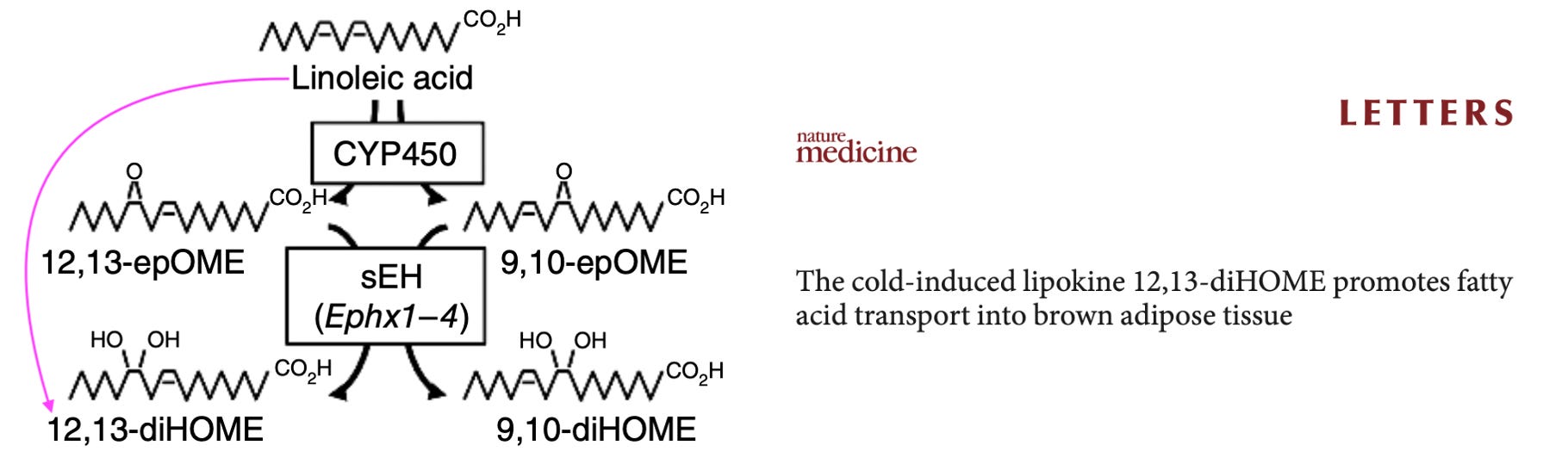
One class of hormones that’s particularly interesting are the oxylipins—metabolites of polyunsaturated fats like omega-3 and omega-6. One specific oxylipin gaining attention is 12,13-diHOME, a derivative of the omega-6 fat linoleic acid.
In a nutshell:
This study found that 12,13-diHOME levels decrease with age in both humans and animals, alongside a decline in brown fat activity.
This decline is associated with decreased cardiovascular function, as 12,13-diHOME acts on the heart to keep it functioning optimally.
But, fats-cinatingly, transplanting brown fat from young animals into old animals or directly treating old animals with 12,13-diHOME restores youthful cardiovascular function.
And here’s the kicker: There are already interventions you can use to boost 12,13-diHOME without pills or injections.
I promise, we’re getting to that. But first, let’s look at more data.
“Show, Don’t Tell” — A Look at the diHOME Data
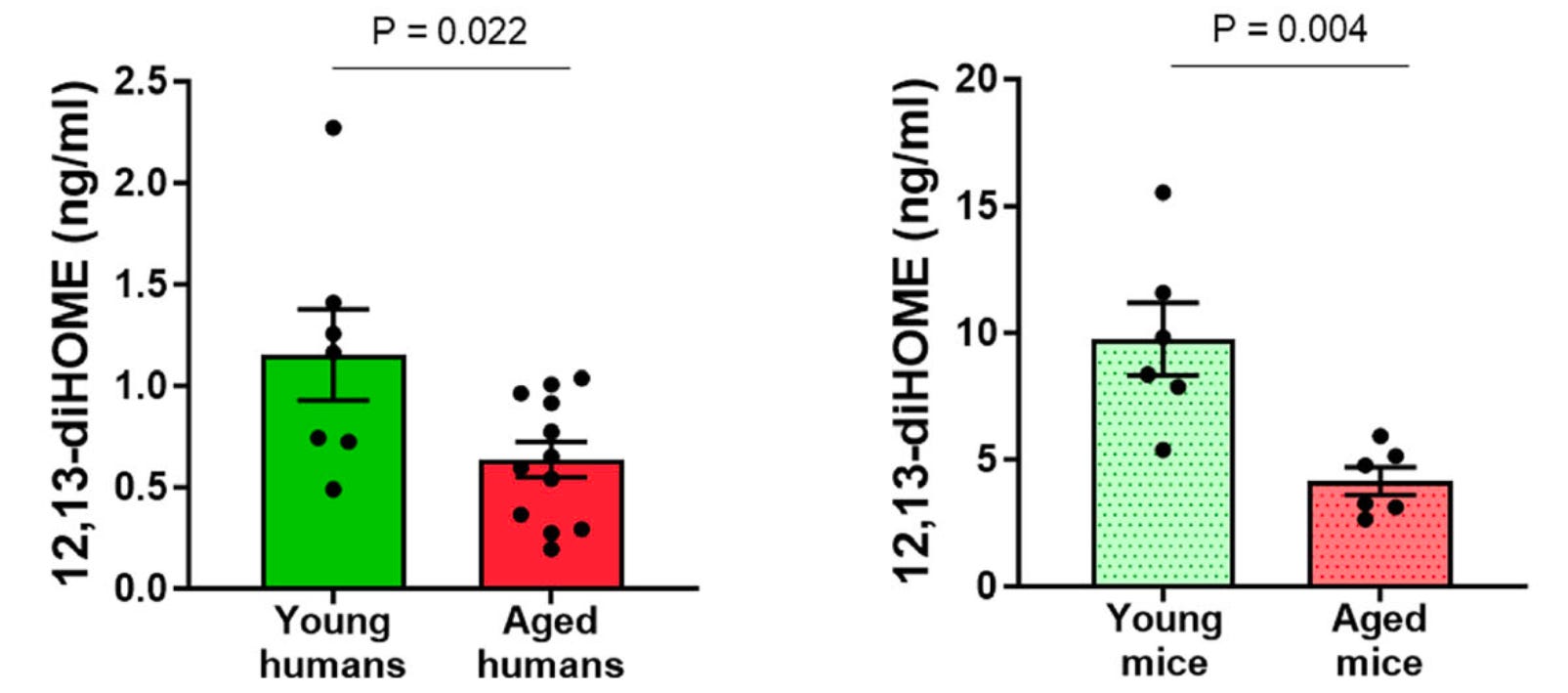
Below are several panels from the paper. These bar graphs show that 12,13-diHOME levels decrease similarly in aged humans (65–90 years) and aged mice, compared to their younger counterparts (18–35 years for the human sample). This helps to establish conservation of physiology and support the human relevance of the animal studies that followed.
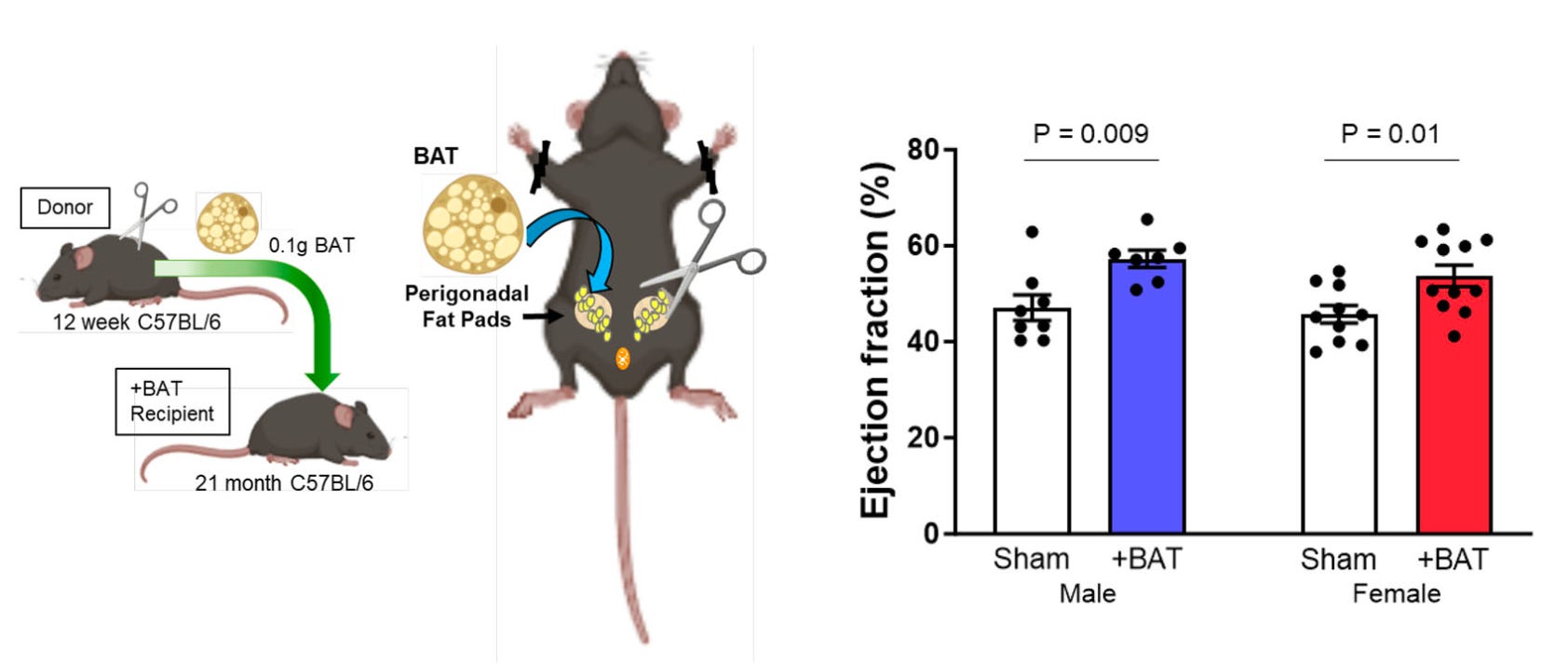
What you see next is the schematic and results of the brown fat transplantation experiment. Brown fat was taken from young mice (12 weeks old) and transplanted into the visceral cavity of old mice (21 months old).
This improved cardiovascular function.
I won’t walk through all the parameters from the paper, but I’ve highlighted ejection fraction—an important measure of how much blood the heart pumps out of its left ventricle with each beat. Ejection fraction declines with age.
And, as you can see, the brown fat transplant—literally placing brown fat from a young animal into the body cavity of an older animal—restores this functional measure of cardiovascular function to more youthful levels.
“Cool!” (Those quotation marks will make sense later.)
It’s also worth noting that the brown fat transplant increased levels of 12,13-diHOME.
And when researchers boosted 12,13-diHOME through another method called—brace yourself— “tissue nanotransfection (TNT) with epoxide hydrolase 1 and 2” (yah... scientists really struggle with naming things), the results were similar.
The punchline: Boosting 12,13-diHOME is sufficient to improve and rejuvenate cardiovascular function.
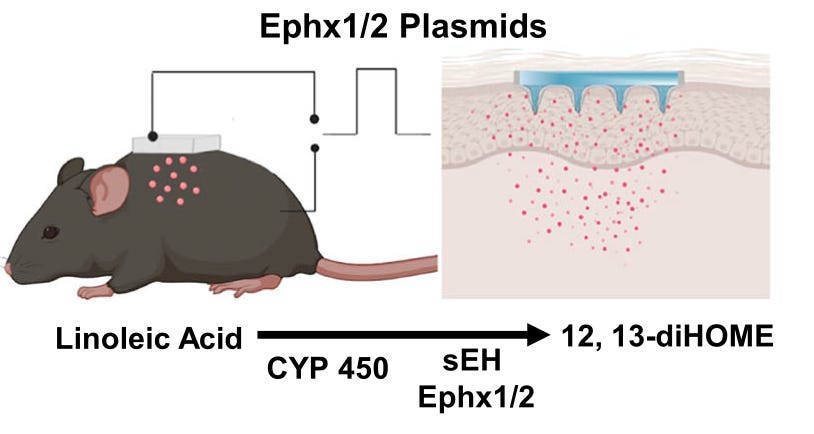
*Nuance Note (Skippable): For those wanting the details on TNT technology: you can’t simply inject all hormones into the body, because many don’t last long—they have short half-lives. So instead of injecting the hormone, you need a form of gene therapy that enables the organism’s own cells to produce more of it. In this case, genetic instructions for making the hormone (specifically, codes for the enzymes Ephx1 and Ephx2, which synthesize 12,13-diHOME) are delivered through a patch on the skin. This gives the organism an enhanced ability to make the hormone—like genetic hormone replacement therapy.
Mechanisms: 12,13-diHOME Reduces ER Stress and Perivascular Fibrosis
How 12,13-diHOME protects against cardiovascular aging is still being investigated.
However, at least two biological mechanisms were highlighted in the paper.
First, 12,13-diHOME combats something called ER stress—a cellular condition that arises when the endoplasmic reticulum can’t properly fold and process proteins, leading to an accumulation of misfolded “bad” proteins. If this stress is prolonged, it can lead to cellular damage, death, and dysfunction.
I know I’m battering you with terminology, but think of ER stress as one of the core pillars of aging and metabolic dysfunction—like oxidative stress or inflammation. And 12,13-diHOME helps reduce it.
Second, 12,13-diHOME fights a process called perivascular fibrosis, in which dense, hard connective tissue builds up around blood vessels, making them less flexible and less functional. This, again, is a hallmark of cardiovascular aging—and it is offset by 12,13-diHOME.
And just to complete the picture—and because we’ve come this far with the jargon—CaMKII is the enzyme that serves as a control switch for these processes inside cells. 12,13-diHOME inhibits CaMKII, and by doing so, helps restore youthful metabolic and cardiac function.
Brief Summary
Aging is often seen as an unstoppable decline, but this study offers a counterpoint: 12,13-diHOME, a lipid hormone secreted by brown fat, declines with age in humans and animals, and this decline contributes to poorer heart function. Boosting this hormone—either through young brown fat transplants or direct biochemical interventions—restores cardiovascular health in aging animals.
The science is clear: boosting 12,13-diHOME can rejuvenate the heart. But the most important question remains: How do you actually do it?
In the rest of this letter, we will discuss:
How to Increase 12,13-diHOME levels naturally: The specific, non-invasive method proven to significantly elevate this hormone — no pills, supplements or gene therapy.
The Intersection of BMI, Metabolic Health and 12,13-diHOME: Why some people are better at producing this hormone.
Important & Practical Takeaways from This Research: My final synthesis on what this means for slowing cardiovascular aging.
