


For decades, we’ve been told to cut back on salt to control blood pressure. The U.S. Dietary Guidelines still recommends limiting sodium intake to 2.3 grams per day.
But the science behind this advice is far from settled.
In fact, some long-term studies suggest the opposite: that lower sodium intake associates with higher blood pressure. And—curiously—people with obesity tend to be more salt-sensitive than lean individuals. Why?
We’re going to unpack these questions today. After reading what’s to come, you will understand the intricate connection among body fat, the brain, and blood pressure— and you will see hypertension in a completely new light.
First, we’ll dive into the science of how a hormone from body fat (leptin) can remodel blood vessels in and around the brain to increase blood pressure.
Then, we’ll dive deeper into the mechanism, giving you enough detail to terrify your cardiologist and woo your nephrologist.
After that, we’ll begin to connect the dots, discussing a human genetic disease and human trial data that help further establish the relevance of this overlooked perspective on hypertension.
Finally, we will make sure you understand how body fat can alter salt sensitivity.
Body Fat and Blood Pressure: A Complex Connection
Emerging research points to obesity as one culprit causing high blood pressure. Not just because of the extra weight, but because of what fat tissue does behind the scenes. Let’s dive into how this works—and what it might mean for understanding and treating hypertension more effectively.
In obesity, there is an excess of fat tissue. Importantly, body fat is not just inert storage; body fat acts as an endocrine organ, meaning it secretes hormones—one of which is leptin.
More fat typically means higher levels of leptin. In humans, elevated leptin levels have been correlated with high blood pressure; however, showing that leptin causes increased blood pressure requires more rigorous, controlled studies conducted in animals. So, let’s look at one such study—a remarkable tour de force published in Cell Metabolism.

In this study, researchers fed mice a high-sugar, high-fat, obesogenic diet. Blood pressure didn’t rise right away; it only increased after the mice had become obese.
Something else happened first…
The researchers observed changes in the blood vessels of the brain, specifically at the blood-brain barrier near the hypothalamus.
Inside the Brain’s Command Center: The Role of the Hypothalamus
As we go forward, it’s critical you understand what the hypothalamus is and its role in controlling whole-body health and homeostasis. So, bear with me for a moment while I ensure that’s clear:
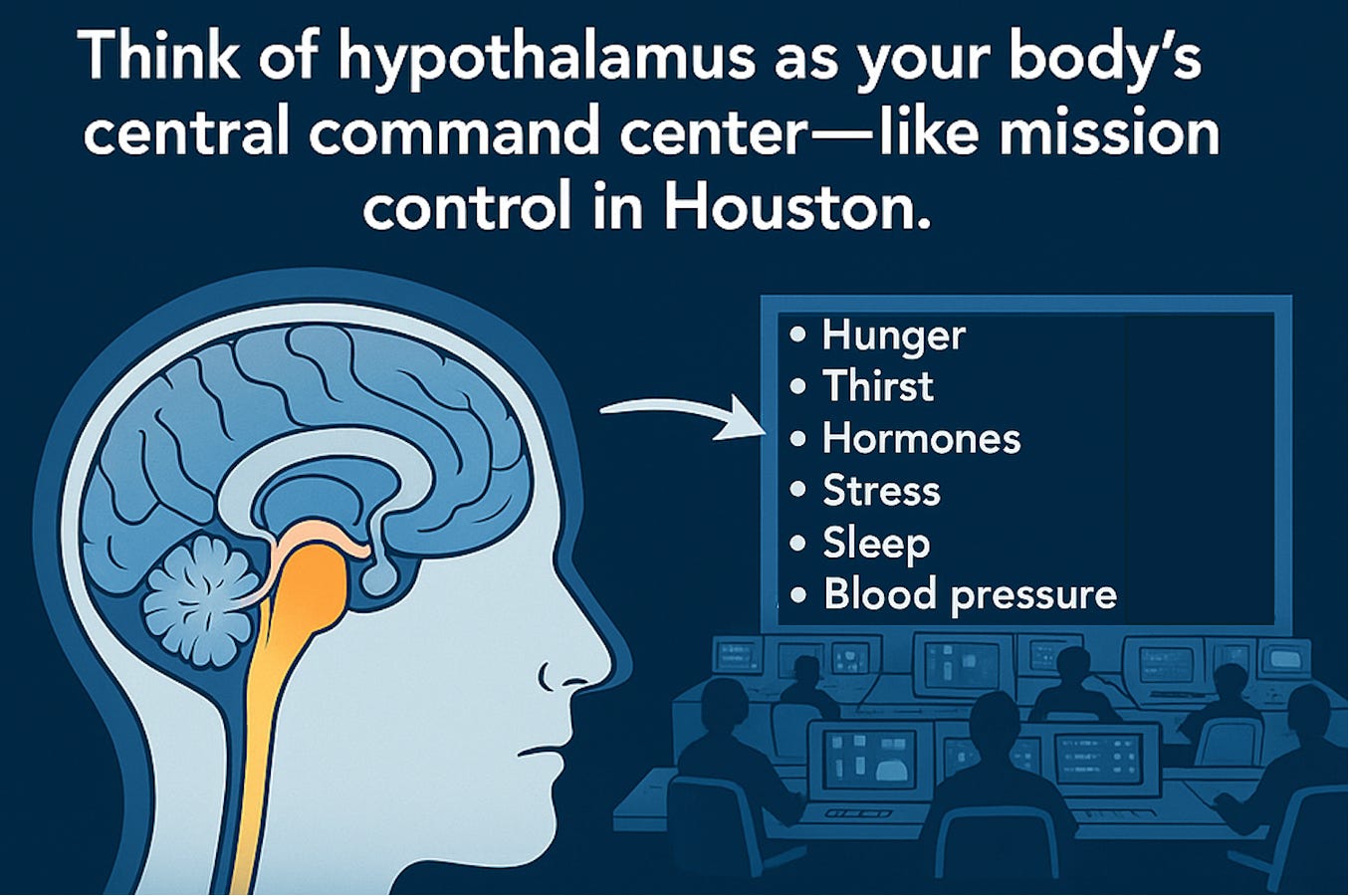
Think of the hypothalamus as your body’s central command center—like mission control in Houston. It sits deep in the brain, just above the brainstem, and constantly monitors your internal environment: temperature, hunger, thirst, hormones, stress, sleep, and blood pressure.
It doesn’t just respond to changes—it orchestrates them. That’s why scientists often call it the master regulator of homeostasis.
In the case of blood pressure, the hypothalamus can ramp up or dial down sympathetic nervous system activity (the “fight or flight” response), influence fluid retention via the kidneys, and even trigger hormonal cascades.
The hypothalamus is not just involved in blood pressure—it’s pulling the strings behind the scenes.
Okay. Did I beat that horse dead enough? Now, back to our main scientific narrative.
Leptin Causes Vascular Changes Around the Hypothalamus
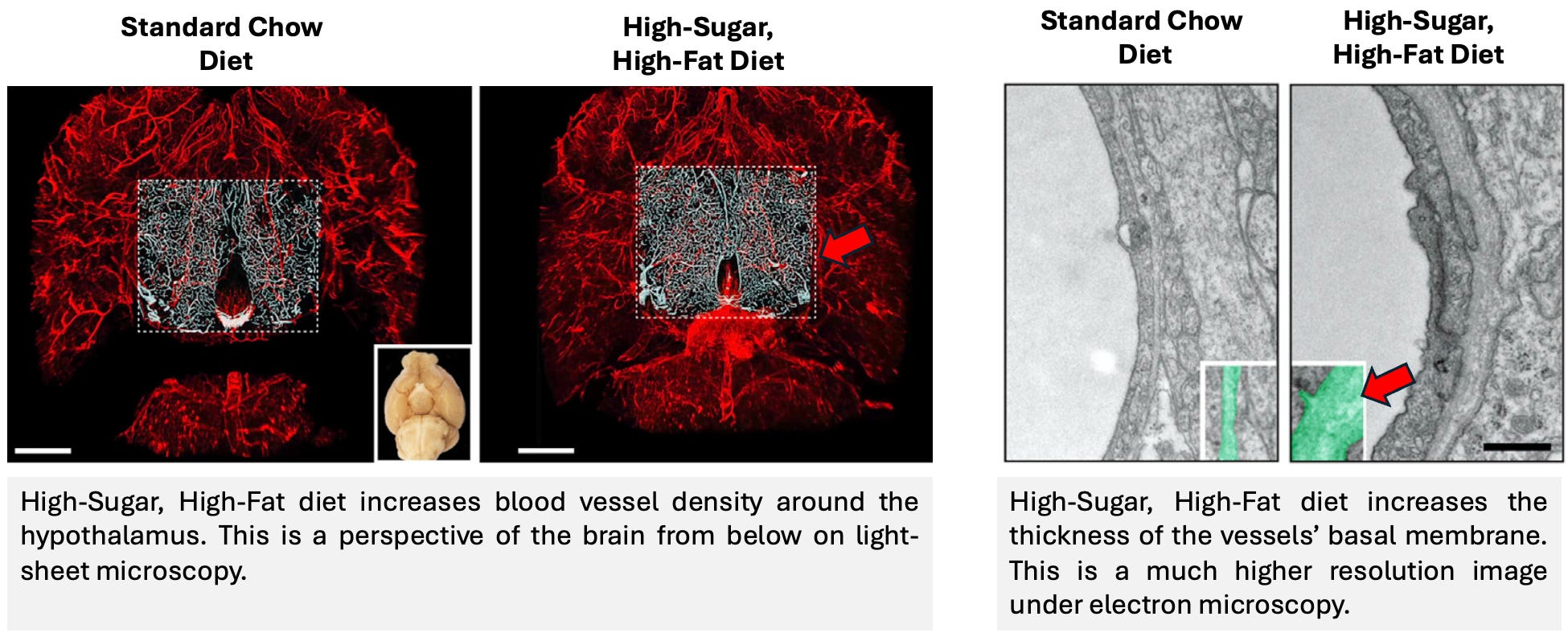
The high-sugar, high-fat diet caused obesity, which contributed to a thickening of vessels around the hypothalamus—something clearly visible below.
Left: These microscope images more zoomed-out and show how the high-sugar, high-fat diet increases the overall density of vessels around the hypothalamus at the base of the brain.
Right: These electron microscope images are more zoomed-in, an you can see a significant thickening of the basal membranes —highlighted in the blue insets—of blood vessels around the hypothalamus.
If that didn’t totally make sense, the takeaway is simple:
The high-sugar, high-fat diet caused obesity, increased in leptin, and caused a significant remodeling of vessels around the brain’s hypothalamus.
And—importantly—this vascular remodeling coincided with rising body fat and leptin levels and preceded the rise in blood pressure.
In the rest of this letter, we discuss:
More Mechanism: A step-by-step breakdown of how—specifically—a signal from fat cells remodels the brain to increase blood pressure.
Reversibility: We'll explore the evidence on whether these changes can be reversed or if fat leaves a permanent “metabolic scar.”
Salt Sensitivity: This perspective could explain how body fat alters salt sensitivity.
Coming back to Clinic: We show how these data align with a more human data, speaking to the relevance of this physiology to how we think of (and manage) high blood pressure.
Read on and walk away with a new and deeper understanding of hypertension…
