


The bile acid TUDCA has the potential to reduce atherosclerosis — the buildup of fatty plaques in arteries.
And it appears to do so not by lowering cholesterol, but by altering the inflammatory pathways that drive plaque formation in the first place.
First, let me be candid: I struggled with how to ‘unfold’ this scientific story for you (that nerd-joke will make sense momentarily).
The study we’re going to explore is dense — filled with jargon, acronyms, and molecular pathways.
And while I respect your intelligence, I also know that most people are naturally repulsed by a firehose of: PERK/eIF2a/ATF4 axis, scRNA-seq, MCC950, endoplasmic reticulum (ER) stress, t-distributed stochastic neighbor embedding, ATF4-AIM2 promoter binding… blah, blah… jargon, jargon.
So, let’s start with the big picture:
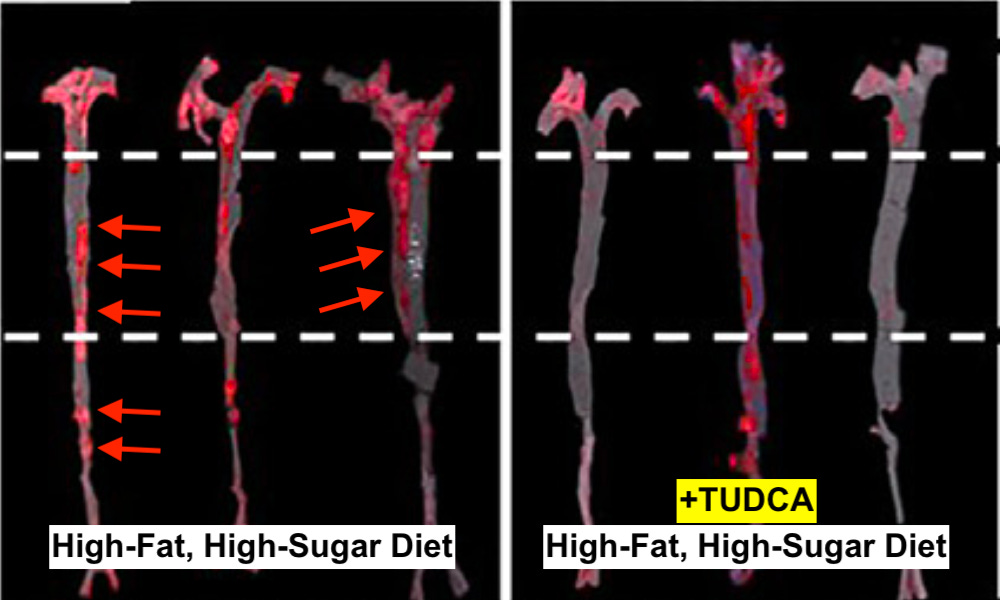
Below, you’ll see an image from a study in which animals were fed a high-fat, high-sugar diet designed to induce atherosclerosis.
But one group received the supplement and bile acid in question, TUDCA.
The difference is clear: Dramatically reduced plaque with TUDCA supplementation.
The rest of this letter is about understanding how TUDCA works — and translating the science into the practical: what it means for your heart.
In this StayCurious Metabolism Premium letter, we dive deep into the mechanisms by which TUDCA may protect against atherosclerosis.
We explore both animal studies and data from human artery samples
We’ll discuss an interesting irony and metabolic intersection with statins
The, we get practical, with guidance on supplementation protocols and sourcing.
If you’ve been curious about why StayCurious Metabolism is a Top 3 Bestseller in Science — and why readers call it “the best investment I’ve made in my health” — now is as good a time as any to find out.
