


What’s healthier for your heart and liver: bacon and eggs, or oatmeal and quinoa?
It seems like a bizarre question, and it certainly offends conventional wisdom about what makes up a “healthy diet.”
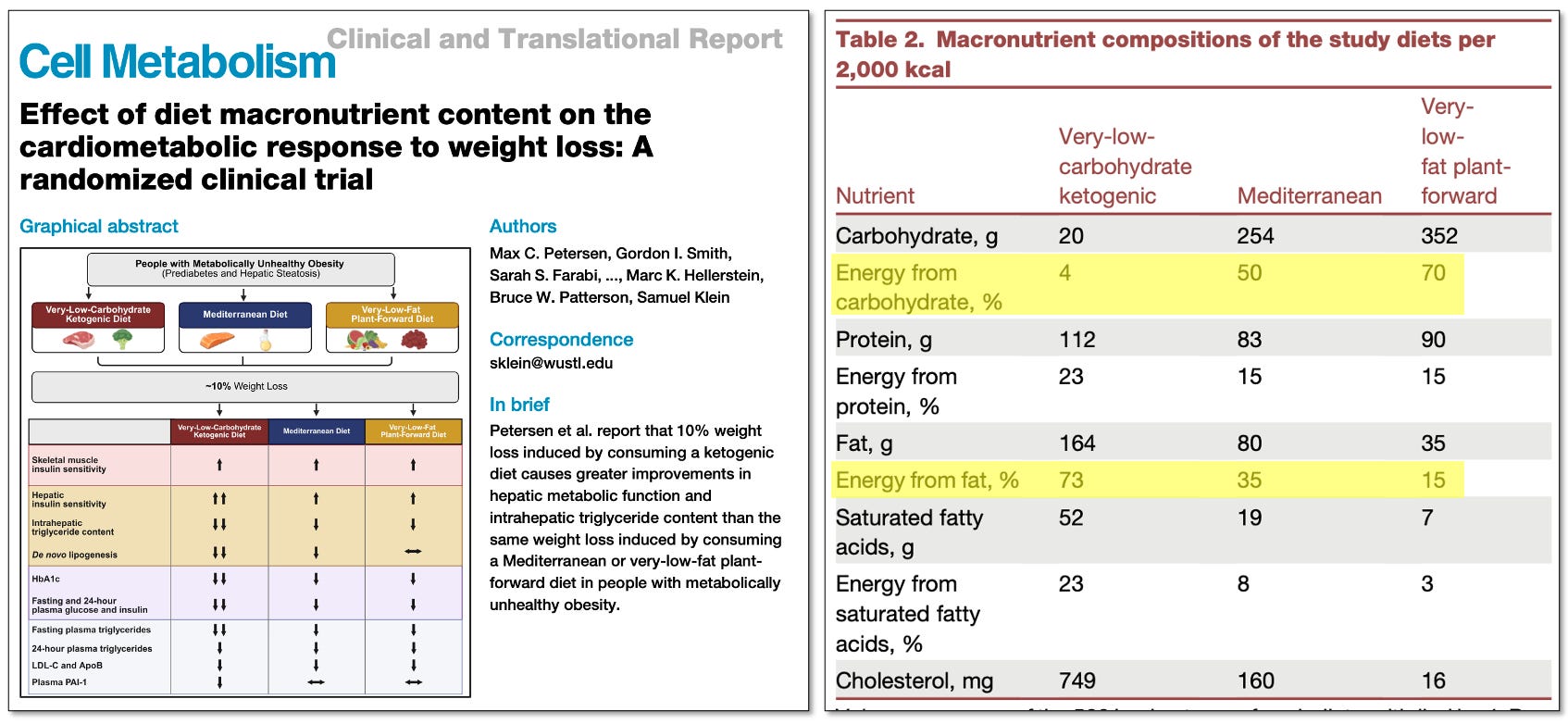
But a major six-month randomized controlled trial just published in a top science journal put versions of these diets head-to-head.
Researchers compared:
A low-carb, high-fat ketogenic diet (4% Calories from Carbs)
A Mediterranean diet (50% Calories from Carbs)
A low-fat plant-based diet (70% Calories from Carbs)

This was unusually rigorous for a nutrition trial.
Researchers recruited participants with obesity, provided them with all their meals, designed each diet to cause the same amount of weight loss, and followed them for six months.
They performed a battery of metabolic assessments, including MRI and DEXA scans and advanced metabolic challenges you can’t just get at your average doctor’s clinic.
And The Winner Is…
And I’ll reveal the punchline to you:
Across several important cardiometabolic outcomes, the low-carb, high-fat ketogenic diet won.
All three diets caused similar amounts of weight loss (~10% weight loss). But the ketogenic diet produced greater reductions in:
Liver fat
Blood sugar
Triglycerides (fat in the blood)
Inflammation markers
Insulin resistance scores
The authors themselves concluded:
“These results demonstrate that a very-low-carbohydrate diet has greater cardiometabolic benefits [as compared to a Mediterranean or very-low-fat diet] in people with metabolically unhealthy obesity.”
Less Liver Synthesis of New Sugar and Fat
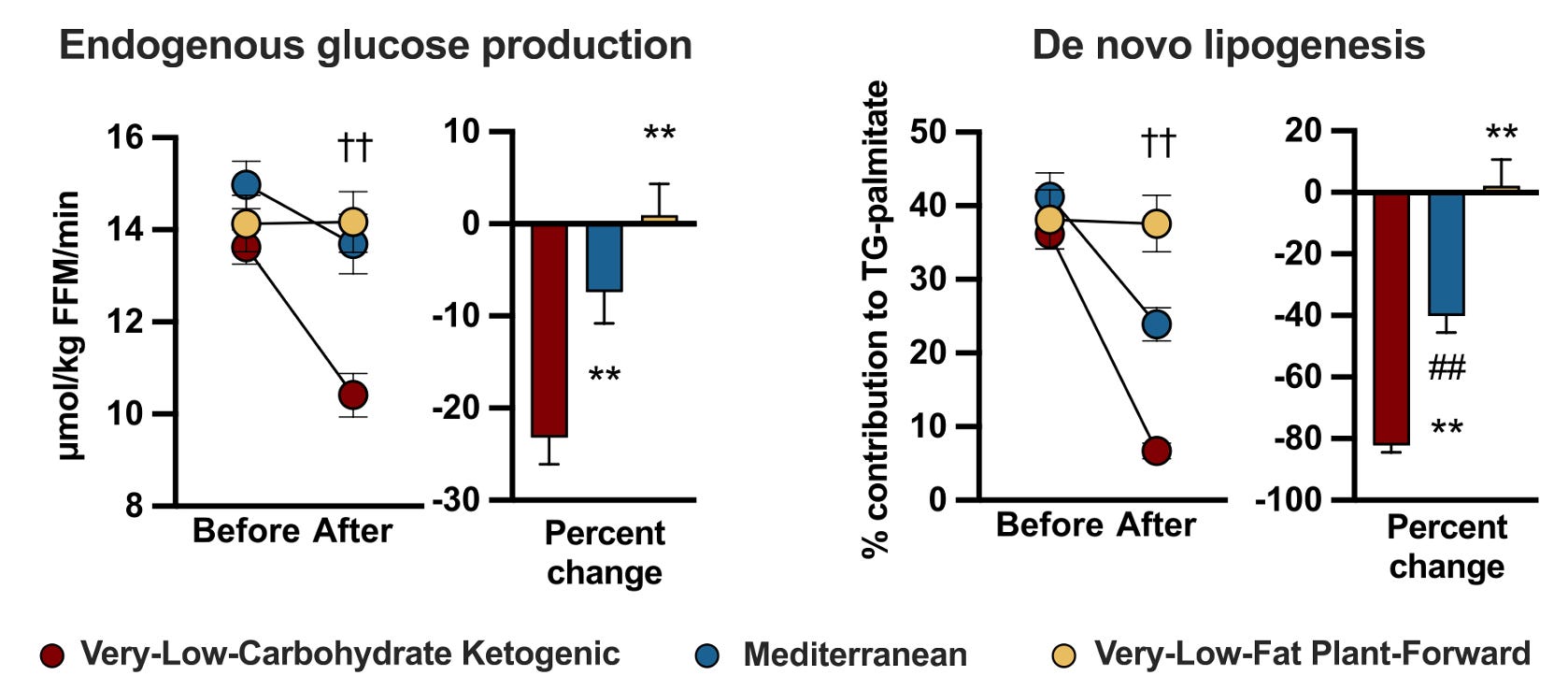
You can also take a look at liver function. In a state of poor metabolic health, the liver makes too much extra glucose and too much extra fat, which is in part why fatty liver drives high blood sugar and high triglycerides.
What you can see is that on a ketogenic diet (red), new “endogenous” glucose production and new fat generation/de novo lipogenesis both dropped dramatically, indicating the positive metabolic ripple effects that carbohydrate restriction had on these participants.
21-Point Improvement in Lipoprotein Insulin Resistance (LP-IR)
And, to pick out just one additional metabolic marker, the ketogenic diet caused a 21-point improvement in lipoprotein insulin resistance (LP-IR), compared with only a 7-point improvement in the Mediterranean diet and a 3-point improvement in the low-fat diet.
Why does that matter?
LP-IR is an incredibly powerful marker of cardiovascular risk. In fact, in other large cohort studies, LP-IR is ~14-times more strongly associated with cardiovascular risk than LDL cholesterol.
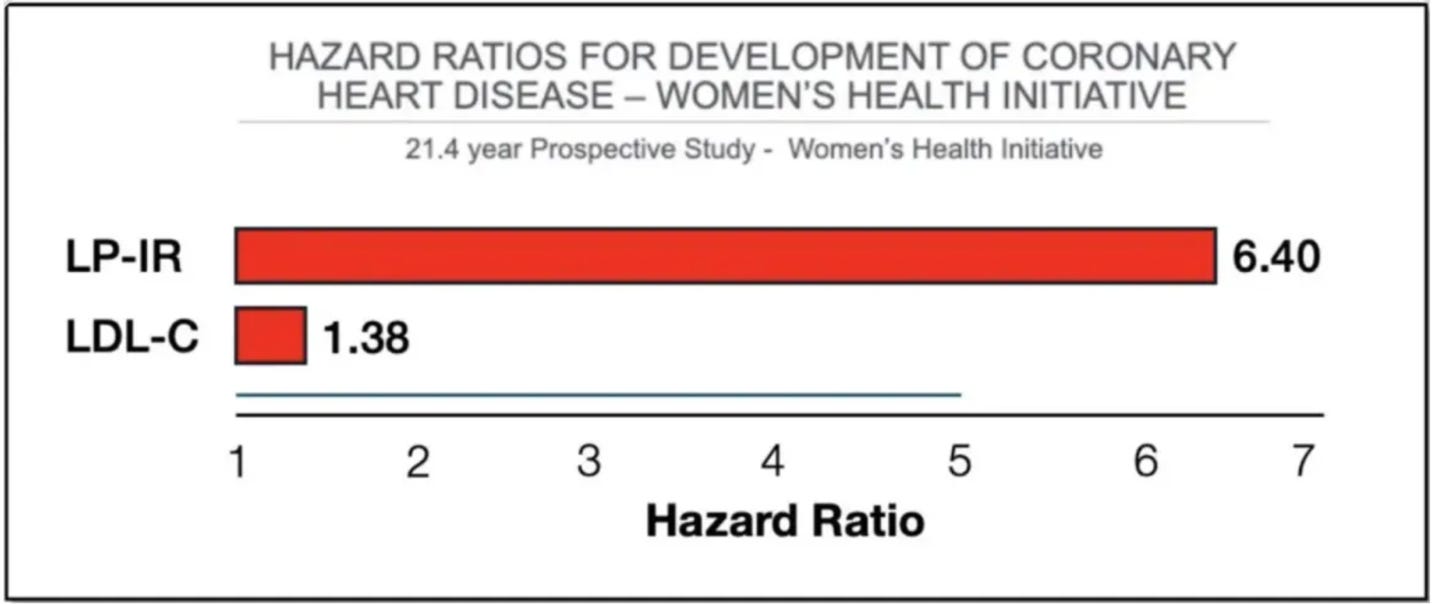
*The hazard ratio for coronary disease associated with insulin resistance score (LP-IR) versus LDL cholesterol. Insulin resistance dwarfs LDL, with a ~14-fold difference in relative risk.
To simplify and clarify the takeaway here: if you were to eat a diet low in carbohydrates but rich in cholesterol and saturated fat, and as a result your insulin resistance score (LP-IR) improved substantially while your LDL, or “bad” cholesterol, went up a little bit, it would be reasonable to say that, overall, you are still improving your liver health, heart health, and metabolic health.
That said, I’ll actually note that in this randomized controlled trial, no diet improved LDL or ApoB more than any other.
But here’s where the study gets almost comical.
What Did The Groups Actually Eat?
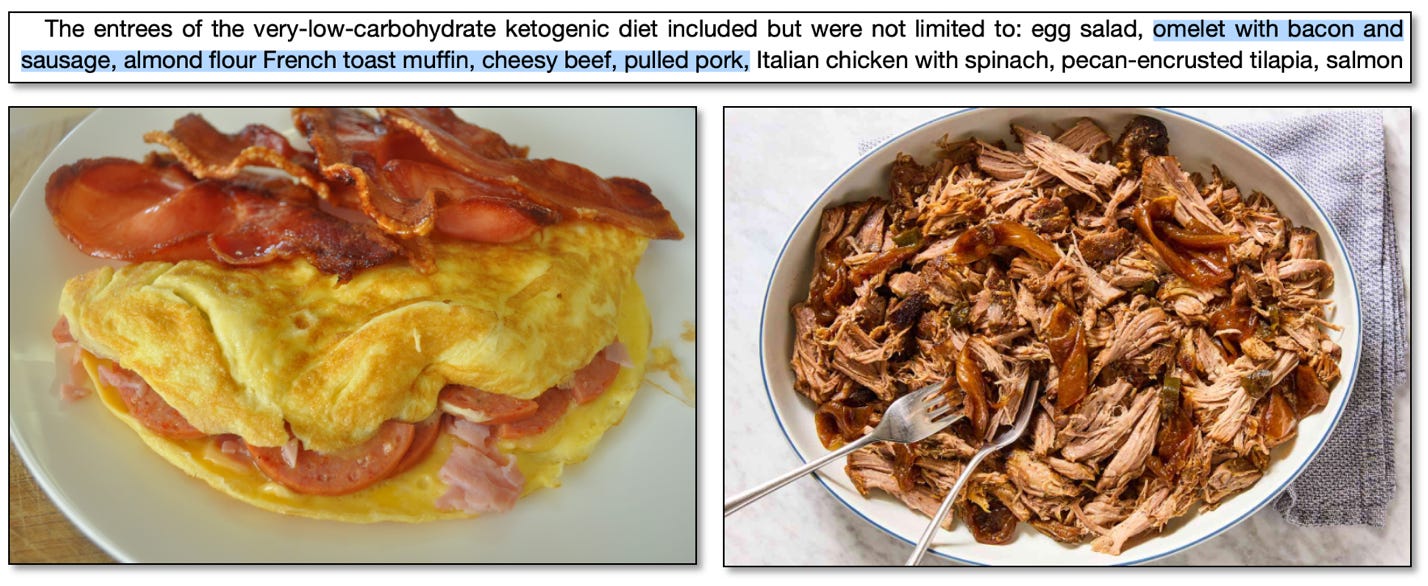
If you go to the methods section, the researchers report that:
The ketogenic diet group ate meals like omelets with bacon and sausage, cheesy beef, pulled pork, and pecan-crusted tilapia.
The Mediterranean diet included meals like chicken pesto pasta, quinoa with beans and corn, and minestrone soup.
And the low-fat, plant-forward diet included meals like apple banana oatmeal, fruit smoothies, and red beans and rice.
So yes, in this rigorous six-month, weight-loss matched, randomized controlled trial, the diet that included bacon, sausage, and cheesy beef produced better results in cardiometabolic health than diets built around foods we conventionally call “heart healthy.”
Talk about a spicy conclusion.
What About LDL and ApoB?
Before we wrap up and I give you my real takeaway, I want to address the LDL and ApoB question.
Conventional wisdom suggests that if you’re eating roughly 5-times as much saturated fat and 50-time as much dietary cholesterol, as participants on the ketogenic diet did compared with the plant-based diet, then LDL cholesterol and ApoB must increase.
Right?
Wrong.
On the ketogenic diet, ApoB fell by 6 mg/dL
On the plant-based diet, it fell by 9 mg/dL.
The difference was not statistically significant (p =0.24, Table 1)
Why?
The answer lies in the participants’ starting point. These individuals began with BMIs around 40 kg/m² and roughly 45% body fat. On low-carbohydrate diets, baseline BMI appears to strongly modify the LDL response: people with higher BMIs tend to experience no changes or decreases in LDL and ApoB when they go low-carb, as we saw in this new trial.
My colleagues and I previously documented this relationship in a meta-analysis of randomized controlled trials, and this seems to be consistent across the literature, while individual responses can, of course, vary.
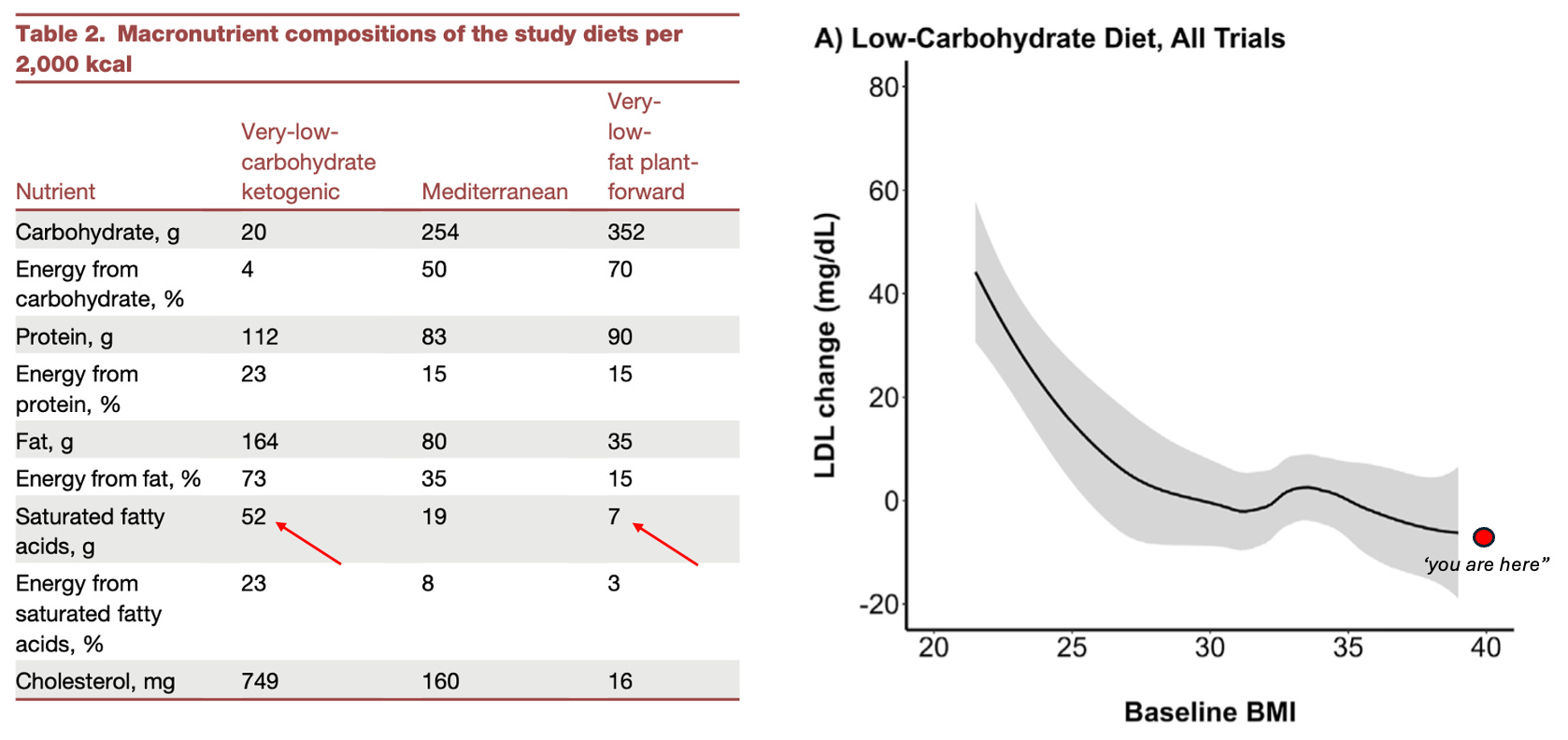
If you want to go deeper into why LDL can rise dramatically in some lean people on low-carbohydrate diets, you can also read about our Lipid Energy Model.
The broader point, however, is that dietary inputs don’t operate in a metabolic vacuum.
Your starting physiology, including body composition and metabolic state, can influence how your biomarkers respond to the exact same dietary intervention.
So the fact that the high-fat, ketogenic diet and low-fat, plant-based diets produced similar changes in LDL and ApoB isn’t a paradox. It’s metabolic context.
What’s The Real Takeaway?
Let’s double-down on “metabolic context” because it’s the whole point of this letter.
I now want to explain a bit more about the biology of obesity, especially as relates to why obesity and insulin resistance drive the generation of new sugar and fat by the liver, as well as the practical implications.
Here’s what happens:
The liver is already carrying too much fat. Insulin sensitivity is impaired, making it harder for the body to handle incoming carbohydrates.
So when you eat carbohydrates, those carbs are broken down into glucose, which enters the bloodstream.
Insulin rises to manage that glucose. Normally, insulin helps move glucose out of the blood and into cells where it can be used or stored, and shuts down the generation of new glucose by the liver. However…
Insulin resistance gets in the way. Glucose is harder to clear, insulin levels rise higher, and the already-overloaded system struggles to handle the incoming fuel.
The liver is also prone to turn more of those carbohydrates into new fat, a process called de novo lipogenesis, while the insulin signal is still insufficient to properly suppress the generation of new sugar.
The result:
Sugar isn’t properly cleared by muscle
The liver is making too much new sugar
The liver is making too much new fat
In the end, fat accumulates in the liver and fat and sugar spill into the blood. I think of this as “milkshake metabolism.”
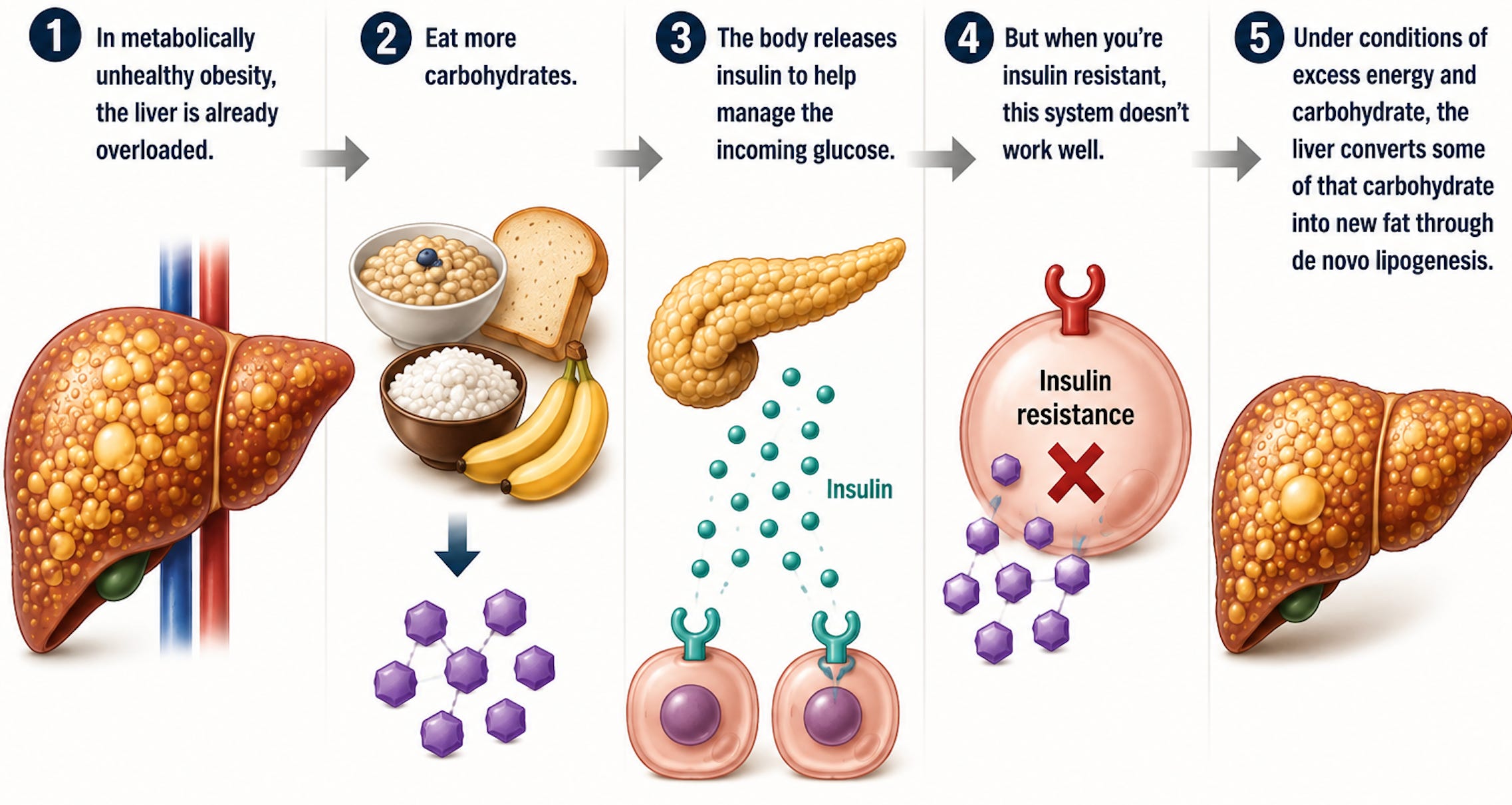
*As a nuance note for the nerdy, insulin resistance is actually quite complex, whereby not all organs and pathways are equally insulin resistant. This means that when your body raises insulin levels further to compensate, you get a chaotic mess of over- and under-stimulation of different pathways. For example, the pathway telling muscles to get glucose out of the blood is impaired, so glucose builds up in the blood and your blood sugar goes up. However, insulin also tells your liver to make fat, and that signal can remain sensitive. So when insulin levels rise to compensate, you get extra stimulus, meaning you make even more fat in your liver that can spill into your blood. This is how you can get a situation where insulin resistance is causing increases in both blood sugar and blood fat.
And here’s the counterintuitive part and practical implication: the solution is not to stop eating fat simply because there’s too much fat in the liver.
If impaired carbohydrate handling is a major part of the metabolic problem, dramatically reducing the carbohydrate coming into the system can give the body less glucose to manage and lower insulin exposure. That can help reduce liver fat and improve insulin sensitivity, even when the diet itself contains substantial amounts of fat.
And that explains the results of the trial where a low-carb, high-fat ketogenic diet — even one where bacon, sausage and eggs were happily on the table — beat a Mediterranean diet and plant-based diets which were both higher in carbs.
This is why metabolic context matters so much.
For someone with obesity, fatty liver, and insulin resistance, reducing carbohydrates can provide a distinct metabolic advantage, sometimes even when that means cutting foods we ordinarily consider “healthy,” like fruit or carbohydrate-rich whole foods such as quinoa.
The lesson isn’t that bacon is healthy and quinoa is unhealthy. It’s that foods don’t enter metabolic vacuums. They enter people. And the metabolic state of that person can completely change the equation.
So stop asking, “What’s the healthiest diet?” Start asking, “What’s the healthiest diet for whom?” Or, better yet, “For you?”
All that said, I definitely give bacon the edge over quinoa when it comes to taste. No question.
This short, free article was a public special covering some breaking news. But if you’re someone who wants to delve deeper into the nuances of metabolic health, please consider subscribing to become a StayCurious Metabolism community member.
You’ll receive 3 or more 3,000- to 5,000-word deep dives per week, access to over 300 archived articles. Our community is already a top two overall global bestseller in science and, more often than not, the #1 rising science Substack in the world. Come become a part of what makes this community so special.

*Or, if you want some more fun, exciting, free learning in video form, check out our latest video on new 2026 data revealing a little-known heart health risk factor and “How to Reverse Atherosclerosis in 1 year (Proven in RCT).”
*Medical Disclaimer: This content is provided for educational and informational purposes only and does not constitute medical advice. It is not intended to diagnose, treat, cure, or prevent any disease, nor is it a substitute for individualized medical advice from a qualified healthcare professional. Always consult your healthcare provider before making changes to medications, supplements, diet, or other aspects of your healthcare.
Now will this make the headline news? My husband put his diabetes in remission, normal fbs, A1C 5.2! He was non insulin dependent for 20 years. Too many side effects from various medications. He had help with a keto diet through Virta. It’s astonishing to me that all his labs improved. He has kept off the 80 lbs that he initially lost and is still losing. I reversed my pre diabetes and lost 30 lbs. My liver enzymes were halved. And it is sustainable, going on 6 years now. Though I do miss iltalian bread and pasta sometimes.
Nick , there is hope of change yet. Mayo Clinic is now touting (too strong of a word) mentioning a “healthy” keto diet. My jaw dropped. You and others like you are leading the way!!!